
Mark Travis
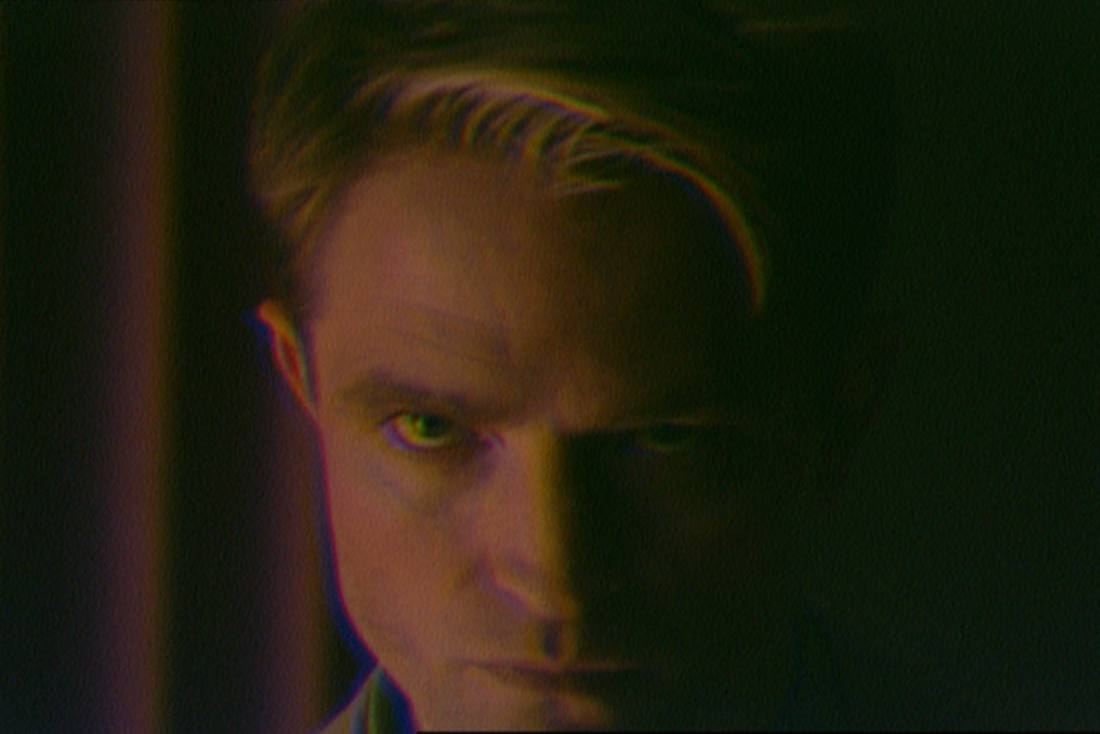
Lance Oppenheim’s “Primetime” is less a complement to David Osit’s 2025 documentary “Predators” than its mirror image. The two films examine Chris Hansen through lenses familiar to his own practice; the documentary is a multi-sourced investigation into why, the narrative film a dramatization of how. Both arrive at the same thesis, though the latter does so much more judgmentally: Hansen’s work exploited its subjects so heavily in pursuit of ratings that it anesthetized the audience’s empathy. And now, close to two decades after his primetime NBC specials stopped filming, that numbness has spread to today’s TV audiences and TikTok scrollers whom Hansen helped groom.
The film loosely follows the timeline of real events, but it is fixed in a very specific period of American history, with early 2000s ephemera scattered across the backdrops. Osama bin Laden’s face is plastered on the target at the police shooting range, justice for Saddam Hussein is promised on TV, and Jared from Subway is still celebrated with a cardboard cutout and a menu special, about a decade before he would plead guilty to child pornography and to soliciting sex with minors. The Iraq War looms over the movie in a pointed way. Americans, in the wake of 9/11, were inundated with war coverage from embedded reporters on a nightly basis (just an hour or two before the “Dateline” jingle played). As the internet blossomed in step, a generation became desensitized to images of mass destruction, so it would soon require abhorrent subject matter to attract attention.
This compulsion fueled the show’s success and popularized a binary, “lesser of two evils” worldview. However depraved its targets were, “To Catch a Predator” relied upon an intentional act of seduction, and the payoff in mind was not a prosecution, but prominence — a primetime slot, an Emmy. So much of American culture, popular or otherwise, now chases the same prize with little regard for the people whose lives are destroyed in the process. As ratings grew, so did the appetite for sensationalism, first from the host and producers, then from the country.
Hansen is not on trial by himself. The smartphone revolution and deteriorating social conditions (stagnant wages and the rising costs of housing and health care) would always cultivate a populace that glorified the hustle not just as a way out, but as a way to the top. But Hansen pushed the darkest scenes that could air on network television upon America and taught an increasingly voyeuristic audience that consuming vile content was not only OK but made them partly responsible for the good work being done. One suspects Hansen would have been disappointed if, in fear of being entrapped on television, every would-be predator had logged off forever.
When you tune in for lewd transcripts with all manner of sucking and being sucked, pedophilic verbiage colonizes your attention, and when part of the appeal is watching the mental torture of the psychiatrically unhinged, your humanity dismantles itself. It’s a very different mechanism from the one at work when you see a violent slasher film every October, which may numb you to guts and gore over time, but is nonetheless held at arm’s length by fiction. Hansen trafficked in reality, broadcasting deleterious fantasies in a precisely edited segment that quickly proved far too salacious to be heralded as a public service announcement, and too entertaining to act as a deterrent.
In the Truth Social era, it’s clear that broadcasting these things did nothing to prevent the further bastardization of internet communications; perhaps it even accelerated it, so that when the soon-to-be president was embroiled in the “grab ’em by the pussy” scandal, half the country shrugged. By 2016, Americans had let a decade’s worth of obscene sewage leak into their living rooms. They had heard something like that before. And they’d seen Trump on “The Apprentice,” too. It’s difficult to determine who the biggest predator on the NBC airwaves was.
To stop at the voyeurism charge is to let Hansen off the hook for his most heinous sin: the interrogation. His insistence on reading the transcripts back at the would-be perpetrators, entering them into evidence not for the jury but for everyone, undercuts the idea that this enterprise served an altruistic purpose. After he dismissed the men with his disingenuous “you’re free to go” catchphrase, a final cruel twist of the knife, the local police seized them. Yet Hansen’s mission was complete before they walked out the door: the elaborate extraction of shame, Nielsen ratings bought with their dignity.
A lean version of the show, without any salacious details, focusing solely on the bust, would have served the public just as well, or better: the production’s methods compromised cases outright. The ends never justified Hansen’s means. Even a police press conference as politically motivated as the one in the film, one celebrating a sting like a drug bust, would reverberate in the way “To Catch a Predator” professed to want, without any of the lurid specifics being spotlighted. But that would deprive the show of its predatory hunter. And that couldn’t stand.
“To Catch a Predator” turned the hidden-camera sting into a pop culture phenomenon, setting off a mass media trend that ran parallel to the United States’ transformation under the Patriot Act. Enraptured Americans sat on their couches and watched their most depraved neighbors humiliated on national television, and the idea fermented that the camera is only ever pointed at the person who deserves to be caught. As the country forcefully pushes back against Flock cameras, it’s worth considering whether our consumption habits allowed the surveillance state to further invade our lives. It wasn’t until everyone was tracked and logged like a suspected felon that the trance was broken.
The movie’s catfisher is Xavier Von Erck (Matthew Maher), the real-life leader of an online vigilante group called Perverted-Justice, which would procure a list of perps for Hansen’s producers by going into chat rooms posing as children and dangling a lure. That group is the sharpest throughline to modern, do-it-yourself mutations of “To Catch a Predator,” which are portrayed in “Predators” as both unintentionally hilarious (“I’m Skeet Hansen … and you’ve just been Skeeted”) and disconcertingly dangerous. Content creators not only imitate Hansen’s cadence and caped posturing, but seem to enjoy the perverse game of reeling in the predators by simulating infantilized and forbidden chat speak. TikTok avengers in Hansen’s lineage often opt for beatdowns rather than immediately involving law enforcement, littering the internet with images of developmentally disabled men getting chased and beaten in Walmart’s aisles and parking lots.
Because the intended crime is so heinous, preying upon would-be predators is a bulletproof grift, placing its provocateurs on an unconquerable moral high ground. “To Catch a Predator” normalized society’s co-opting of justice, asserting that it was OK to administer punishment even if you staged the scene of the crime and co-wrote the script. It’s a cannibalizing spirit that appears virtuous in this, the most bilious of circumstances, but quickly poisons the rest of our interpersonal interactions.
Hansen milked the concept for all it was worth until his lust for a prominent catch put the show on the attack, causing devastating consequences and forcing the network to reckon with the merits of continuing the operation. Louis Conradt, an assistant district attorney in Texas, took the show’s bait online, but stopped short of visiting the decoy’s house. The film depicts Hansen and his producers growing impatient, ultimately enlisting law enforcement to serve a warrant at Conradt’s home while the cameras rolled outside on his front lawn. Conradt shot himself in the head as the officers entered his hallway.
But even this tragic episode doesn’t make it easier to interrogate Hansen’s practices without sounding like a defense of the pedophiles, who, by public consensus, have it coming no matter the method of capture. In the age of Epstein and QAnon, had Hansen kept a national profile during the past decade (he has continued catching predators on lesser-known outlets, including a YouTube channel), it would not be difficult to imagine him running for office purely on a “Gotta Catch ’Em All” platform. Instead, he exists today as a caricature, rendered well in a playful and convincing Pattinson portrayal.
Oppenheim also mixes in some career uncertainty for Hansen’s top producer, Andie (a gum-smacking Merritt Wever), who is offered the chance to jump to rival ABC to work on the emerging “What Would You Do?” with John Quiñones. The new job is pitched as a change from the dark side to the lite. But even though “What Would You Do?” is presented as a moral contrast to “To Catch a Predator,” it is merely a more subtle, less sadistic portrait of the eroding social fabric, one that, by testing several subjects, can usually find a way to end on a celebratory note. The world isn’t any safer, but hypothetically it is. And ABC’s competing human-nature program only further crystallized the media’s desire to summon a jury and elicit a verdict.
Skyler Gisondo’s Dan Plumb is the bait at the end of the line, a fresh-faced and high-pitched twentysomething who is desperate for his break as an actor. For a movie marketed around Hansen’s image, Plumb anchors the film, which ends on the resolution of his arc. The character is based on Dan Schrack, who was interviewed in Osit’s documentary and was clearly still traumatized by his experience two decades later. Gisondo captures this well, the light leaving his eyes when he encounters his first “scene partner,” yet Plumb’s career ambitions force him to ignore the surreal, corrosive circumstances he finds himself in. There’s a meta parallel between the wannabe actor in the film taking on a preposterous, ethically indefensible role to earn an acting credit and the roster of real-life actors making a similar choice to pursue a credit in this film, even if that credit is “Pedophile No. 8.”
Oppenheim marries imagery of the drab suburban decoy homes with fantastical, kaleidoscopic flourishes. Working in the native 4:3 aspect ratio of the tube-TV era, he elevates the material from our past into a pseudo-reality, where it seems reasonable to wonder whether “To Catch a Predator” was some network executive’s fever dream and nothing more. Oppenheim, who co-directed an upcoming documentary about Elizabeth Holmes called “You Can See Everything” with superlative cringe comedian Nathan Fielder, infuses the statutory seriousness of the subject matter with a potent strain of dark humor and plainly funny gags (Gisondo doing Pattinson doing Hansen).
The movie is almost as much a bizarro comedy as it is an unsanctioned biopic. Oppenheim brings the hammer down on Hansen and the network that enabled him, but he also elucidates the incriminating circumstances that led to his success. What that says about us is left for the audience to decide. After all, I bought a ticket to “Primetime.” That is more intentional than turning on the TV and tuning it to NBC. And it cost more than the price of admission.

If "Backrooms" is to start a trend in our ever-evolving content pipeline, right now there is a teenager constructing the framework for a 2032 box office smash in Fortnite's Creative mode, probably based on a copypasta he read on Discord. That's because the origin of the latest horror hit "Backrooms" is not the "twisted mind of" a directing wunderkind, but an even darker place: the seedy servers and terrifying threads of 4Chan and Reddit. And its creator was not a prodigy of film, but rather of software, of mood, of mythopoeia.
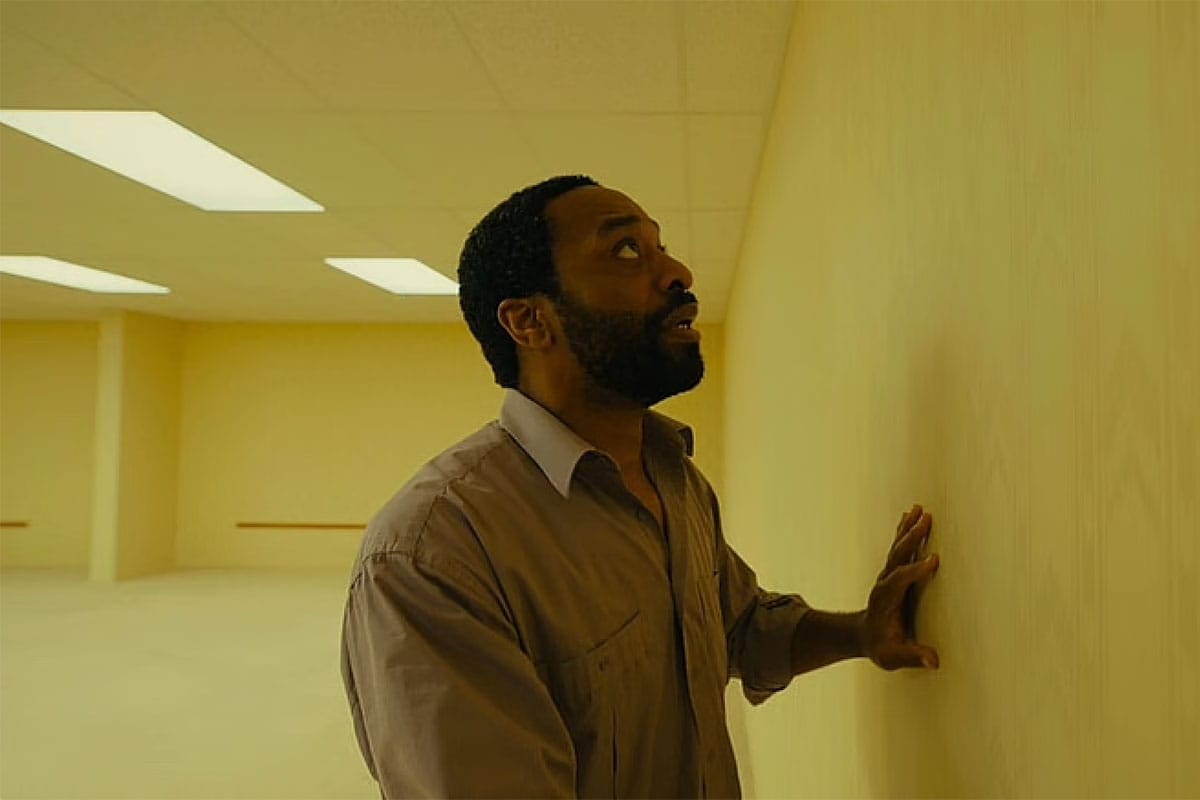
Kane Parsons, the movie's 20-year-old director, has elevated a YouTube series born of something like an anonymous writing prompt into a legitimately gripping feature debut. He has seamlessly transitioned his canvas from Blender, a free and open source software used to create 3-D models, to a 30,000-square-foot soundstage in Vancouver, replacing fully digital characters with Oscar nominees Chiwetel Ejiofor and Renate Reinsve, and crafted a visually interesting and thematically layered film that is literally nothing but vacuous, redundant spaces but never feels empty or repetitive.
The concept of Backrooms comes from a 2011 4chan post which, accompanied by a photo of an empty office space not unlike the ones displayed in the film, said this:
"If you're not careful, and you noclip out of reality in the wrong areas, you'll end up in the Backrooms, where it's nothing but the stink of old moist carpet, the madness of mono-yellow, the endless background noise of fluorescent lights at maximum hum-buzz, and approximately six hundred million square miles of randomly segmented empty rooms to be trapped in."
This became a public source IP of sorts, with many online users iterating their own digital worlds or narratives off this premise. Parsons' work, grounded by a VHS-filter and bolstered by a sinister, sinuous backstory involving corporate conspiracy and creatures of ambiguous origin, became synonymous with the Backrooms concept despite it not being his invention. It's a landmark development, somewhat rooted in the ground Rooster Teeth broke with their "Red vs. Blue" series, which used the Halo universe and its polychromatic soldiers to create a web series parodying war and sci-fi. "Backrooms" strikes a far darker tone, though, and having been derived from a much thinner premise, offers a structurally appropriate set of endless possibilities.
The seminal idea of Backrooms is "noclipping," which is more or less a way to describe a glitchy process in video games where a player might fall through a specific part of the map, winding up stuck there and unable to re-join the game (I remember many late nights in middle school trying to accomplish this feat in Gears of War). While it's a rather horripilative concept, the brief glimpse we see of the portal into this liminal space in "Backrooms" is alluring, as if glancing through a window into a different galaxy.
For the film's main characters, even while overcome with fear and confusion in their new setting, the Backrooms represent a tantalizing escape from empty, isolated lives. Before either crosses the barrier into this twisted dimension, they are already trapped by typical constraints of human life: childhood trauma, relationship and professional turmoil, an all-consuming dreariness. Reinsve's Mary is a therapist guiding Ejiofor's Clark through a period of marital strife, sputtering sales and deep-seated resentment regarding his fraying aspirations of an architectural career. By the end, one of the characters is seemingly more at peace with the rules of this newly discovered world than the one on the surface.
Although the screenplay for "Backrooms" was written by Will Soodik, it is nonetheless impressive that Parsons renders textual and subtextual material well beyond his years so intriguingly. In theory, a horror movie directed by a 20-year-old conjures the expectation of something gory and explicit with densely packed scares that placate the fried synapses of the TikTok generation. But "Backrooms" is neither that nor is it simply a hypnotic, monochromatic ocular maze that breaks the spell with freaks and frights. Rather, the most unsettling things about the movie are the thoughts it leaves you with.
And that the director is 20 years old is not for the sake of novelty. His perspective is essential to the cohesiveness of the film, for this is a movie rife with the terrors of the modern age, those stunting and stagnating Parsons' generation.
For starters, it is easy to see the Backrooms as an allegory for the vast cyberspaces that consume an increasing amount of young people's free time. Generation Z is the first human cohort for whom it is entirely possible to spend the majority of their waking hours engaged (or perhaps ensnared) in purely digital, online worlds. Twitch streams, TikTok scrolls, YouTube content like Parsons' original works - a cascade of content so sprawling that it becomes mundane, its effect increasingly muted. Even role playing within open-world video games has become popular across Minecraft, Roblox, Fortnite and Grand Theft Auto. The result is not a bifurcation of the persona, but rather the thinning of the barrier between the pure and pixelated worlds to the point of imperceptibility.
But what brought society to the doorstep of the Backrooms? Parsons has an idea. The movie's present-day narrative is spliced with flashbacks to Mary's own traumatic childhood, when her paranoid mother kept her locked inside her house, with boarded up windows and blocked off doorways. Mary not being allowed to leave her house as a child is a parallel to a generation of kids who were locked in their homes during the pandemic, suffering psychological damage en masse that can't properly be assessed or abandoned. Parsons was a high schooler when COVID-19 shutdown the world; his first Backrooms YouTube video was posted in November 2021, so at least someone used that time to enhance their career prospects.
Given its pointed commentary on modern times, it's worth wondering why this movie takes place two decades in the past. The obvious answer is that a movie set in the 90s enables an era-appropriate use of the VHS camcorder, and the faux-tape footage provides the most engrossing moments of "Backrooms." It, of course, also eliminates the cell phone problem. It is 2026, after all, when Los Angeles teens are posting "Scientology runs" on a daily basis, so clearly today's youth would have had no problem descending upon Captain Clark's Ottoman Empire in droves to thrust themselves into the labyrinth, livestreaming the whole affair and forcing some sort of large-scale governmental action.
On that note, the degree to which the powers that be are aware of the Backrooms isn't clear in the movie, at least not to someone who has no relationship with the preexisting lore. Mark Duplass' Phil character is shown sparsely in the film, but it's clear from early on that he is a scientist entrusted with a secret mission to observe the developments in the Backrooms, though the ultimate purpose is never revealed (did someone say "sequel"?). It also isn't clear whether the Backrooms are a naturally-occurring phenomenon or if it is something the government or a corporation is in control of.
So we don't know how things are happening, but it is clear what is happening: Things are being copied ad infinitum, specifically everything on the ground level of Clark's furniture store. Most of the Backrooms are filled with replicas of his products (stools, chairs, couches), but crucially there are also people, or at least facsimiles of them with varying degrees of vasculature. Underground copies of humans is something we've seen depicted in high-brow Sci-Fi shows like "Severance" and "Westworld," but the duplicates here more closely resemble those in Jordan Peele's "US." Disfigured, mostly lame, an existence and a purpose that isn't clear.
The distorted appearances of the copies and even the physical spaces themselves more than hint at the movie's most prominent subtextual topic: Generative AI. The copies of humans in "Backrooms" have misaligned eyes, multiple noses, several faces grafted onto one head. The floors go on forever, with each iteration somewhat different, often worse and more bizarre; chairs sink further into the ground, couches hang on the wall. This is precisely the experience that services like ChatGPT provided in their infancy, generating nonsensical slop ineffectively and inefficiently. The film underscores that AI-generated content is not just eclectic ephemera and that it comes at a steep cost. Clark is beseeched by mounting electric bills and erratic power outages, which are a direct result of the power being stolen and wasted by the Backrooms.
Given that the movie is set in the 90s, it makes sense that this never-ending series of rooms is manifesting itself underground. Back then, the common perception of the Internet was that it was occurring beneath us through a network of vast underground cables. As time went on, "the cloud" entered the nomenclature, so the Internet briefly took on the identity of something intangible, beyond our grasp. Of course, in recent years, what "the cloud" actually means has become more understood as data centers pop up across the world and compete with humanity for space and natural resources. Were "Backrooms" set in the 2020s, perhaps this analogy would manifest itself in the form of an ever-expanding server farm, like the SolidGoldMagikarp facility in Ari Aster's prescient "Eddington." Instead, the limitless expanse of history is contained underground in "Backrooms," its impact growing in every direction.
It is interesting to see the past rendered this way, like revisiting the draft history of a Word document in 3-D. The detritus of our memories has distended from shoe boxes and photo albums to an infinite number of selfies, texts, emails and game saves, all stored in a computational warehouse that drains our lakes and pollutes our air. With these new methods of serialization, much more of humanity's dark side will be preserved than when human beings got to decide how each other would be remembered. Our flaws will take up even more space in the Backrooms of the data centers than will our feats. The cotton-filled caricatures of our grandparents that we carry with us will be the last of selective recollections; our warts and cysts will persist - and bleed when our progeny confronts them.
One could argue that "Backrooms" doesn't implicitly intend any of these interpretations. It's true that the nature of the film's design allows for viewers to construct their own mythology, which is in and of itself one of its positive prescriptions. In an age when algorithms curate taste and shape understandings of the world, starting with a blank slate, filling it with just enough content and more than enough craft to generate attention, and asking the audience to form their own conclusions is a creative exercise humanity could use more of.
)
(This review contains spoilers. Do not read it if you have not seen the movie.)
Norwegian director Kristoffer Borgli’s previous two feature films have satirized the alienating effect of exposure in the antisocial age of social media. In “Sick of Myself,” Signe’s jealous lust for attention drives her to intentionally disfigure herself, desperate for sympathy to be a path to popularity. In “Dream Scenario,” also-ran professor Paul Matthews experiences an unexpected and meteoric rise to global icon status - and then endures the precipitous and inevitable drop awaiting anyone who approaches the apex of modernity’s zeitgeist.
“The Drama” chambers a central conceit of the former (the toxifying effect of an identity crisis on a relationship) and the latter (pinning life-deflating consequences on someone based on conceptual actions) and applies the pressure of a uniquely American taboo to the trigger, discharging Borgli’s best work yet.
Still fascinated by society’s unceasing search for the moral high ground, Borgli conjures another distinctly bleak and dark romcom around a series of questions that pair terribly with a bottle of skin-contact wine: How accountable is someone for their worst thoughts? What form of adjudication is most appropriate for a plan, however heinous, unfulfilled? To what degree is a functional adult beholden to their most disturbing notions as a juvenile?
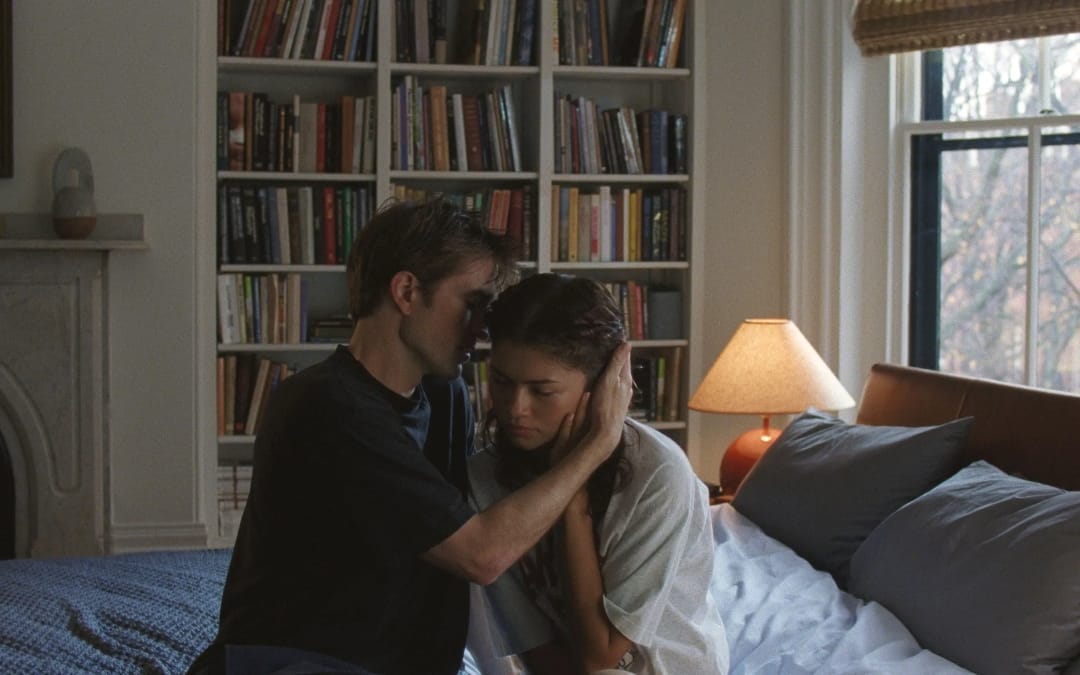
Key to making this feel like a predatory interrogation is Zendaya’s career-best performance as Emma. She employs her natural charm to portray a character who is both disarming and disarmed, at first free from her past and then persecuted for it. Emma is immediately the apple of Charlie’s (Robert Pattinson) eye, even if his initial approach falls upon a deaf ear. The film fast forwards past the premarital courtship elegantly through a series of flashbacks inspired by Charlie’s work-in-progress wedding speech. But the strength of their connection is quickly undermined by what they don’t know about each other, or at least the one thing Charlie does not know about who his bride-to-be used to be. A week away from the wedding, a tipsy Emma reveals to her fiancé, as well as the best man and maid of honor, that she once planned a school shooting.
Borgli constructs the framework for his latest social satire about humanity’s eroding compatibility with a sensibility and lack of sensitivity that matches with his previous works. Once Emma spills the tea, the gaps are filled in with tragicomic glimpses of her teenage self gripping a rifle like a comfort stuffed animal during her many failed attempts to film a morbid manifesto (shout-out Sally!). The worst things his characters have done are the driving force of the narrative, but they are not specific to his overall point. Emma’s secret could have been derived from any number of sensitive subjects, such as a failed suicide attempt or shooting a dog (something one of the flashbacks shows us she considered), without nullifying the film’s themes. If the script was flipped and Charlie said his biggest blemish was getting a DUI, perhaps he would have been the one to incite Rachel’s ire, for her cousin could have been paralyzed by a collision with a drunk driver instead of a shooting. (Rachel is a truly reprehensible character, portrayed villainously and expertly by Alana Haim.)
What a potential school shooting offers as a plot device is a guaranteed touchstone at scale. Virtually everyone watching this movie has been enrolled at a school; audience members under 30 probably even went through active shooter training drills. Everyone watching this movie has seen coverage of mass shootings on the news, over and over and over again. And everyone watching this movie in the theater is taking some degree of risk to do so, likely even more than with your average film given the subject matter, because of what happened in Aurora, Colorado, in 2012. Mass shootings are universally understood and discomforting in the United States, in even more ways than suicide and drunk driving. When the backup DJ drops some of his gear, there’s a fraction of a second, intrinsic for multiple generations of Americans now, when you instinctually assume what you just heard was not part of the movie. (I know my eyes jumped to the entrance by the bottom of the stairs.)
Borgli’s films are all about the corrosive side effects of attention. Here he posits that a lack of regard can be just as destructive to the psyche.
Most of the criticism of "The Drama" condemns Borgli for evoking this politically charged subject matter without cross-examining it thoroughly. It’s true that the movie does not attempt to say anything profound about America’s gun violence problems, but in expecting him to do so, Borgli is being punished for making the first mainstream film to prominently feature such imagery, particularly from the perspective of a potential assailant. Had this thorny topic been broached on the big screen before, perhaps it would be easier for some to engage with an offering that uses the recoil of mass shootings to examine and humorize moral hypocrisies within a small group of friends rather than attempting to reverse America’s grander societal rot.
In this original script, Borgli had the entire palette of traumatic and problematic character flaws at his disposal, and he chose to color between the outlines of his caricatures with a bright, bloody red. He enters uncharted waters and propagates a sin that’s impossible to be insouciant about, but forgoes a call for America to repent and turn over their guns. While Borgli has been chastised for undercooking his rebuke of America's militarized "Brainrot", to the extent that it was even the main course to begin with, the trade-off is potent word-of-mouth promo about a shocking revelation.
If that seems exploitative, maybe it is. But in a sense, Borgli is betting on the audience to prove his point: That the United States is enthralled enough with mass shootings to find a subversive intrigue in Emma's disclosure. Americans are willing to consume content about mass shootings (e.g. this movie) but are averse to engaging in the conversations necessary to stop them from happening. That's because it involves two policy matters – gun control and health care – that their government has no interest in addressing. The country is fixated on gun violence, and thus apathetic toward its extinction.
Furthermore, Americans are just as uncomfortable with the idea of rehabilitation as they are with any perceived infringement on their 2nd Amendment rights. Prisons are overflowing as profits spill into deep pockets and disenfranchised families drown in waves economic and spiritual hardship. Emma is not prosecuted for her theoretical crimes, but the fear of ostracization over her thoughts forces her to bury those feelings in a place where they are unlikely to be exhumed and properly examined.
Ironically, the character with skeletons in her closet is the only person who seems comfortable in their own skin – at least until those closest to Emma overwhelm her defense mechanisms so they can chastise her teenage subconscious. Charlie experiences a bifurcation of his love in a way that maps perfectly onto the United States’ relationship with guns; the line between horror and fetishization is very thin. He struggles to determine whether this is the scariest thing about Emma, or the sexiest.
For someone who came dangerously close to upending the lives of hundreds of kids, Emma is reformed and well-adjusted. Her turn to gun control activism is quirky, but representative of a high schooler’s fickle state of mind. All it took was a few new friends to recontextualize dozens of perceived enemies. All things considered, her life turned out great. The average public school student in the United States is probably more likely to encounter a mass shooting than to wind up in the cozy apartment and commodious office spaces on display within this affluent, artsy, Boston-based coterie.
But has Emma found her perfect match? Borgli is always keen to explore the hollow nature of contemporary relationships. Has a genuine romance sprouted from Charlie’s sneakily engineered meet cute, or is modern love nothing more than mining for overlapping interests in an attempt to cure our loneliness? Do we know the people we love, or just the parts of them that reinforce our prerogatives?
Nothing puts a relationship to the test like a wedding, where every detail is refined to the point of performance. This formal framing of love illuminates any imperfections seeping in around the edges, and betrays any splits in the seams. Emma and Charlie’s tectonic drift apart started just as they had settled on the perfect vintage; the more tailored everything must be to our taste, the more improbable a bond becomes. The intangible that the “perfect couple” has is a mutual recognition of each other’s strengths and fallibilities; they share a common desire to magnify the former and minimize the latter. Charlie inverted this crucial axiom at the worst possible time.
"I had a whole speech, but I've forgotten it," Charlie says just before he finally comes clean about his worst transgressions in front of everyone at the wedding. In a film rife with rifles, imagined corpses and projectile vomiting, watching Charlie delete his romantic, gushing tributes to Emma from his Google Doc are the most visceral shots in the movie. Personal credibility is vulnerable as soon as there is any hint of public polarization. In today’s world, you can easily be peer pressured out of love.
Early on, as she readies her own wedding speech, Emma recounts how the realization that she was in her first serious relationship gave her a fit of butterflies so intense it nearly sent her to the hospital. In response, Rachel incredulously asks Emma how she has only just encountered love for the first time so late in her life. "I used to be ugly," Emma says.
In that respect, Emma is precisely the outcast her friends make her out to be. She used to be ugly. Most of the rest of us still are.
)

If someone knows the whereabouts of a shipment of these delicious snacks, please let me know.